
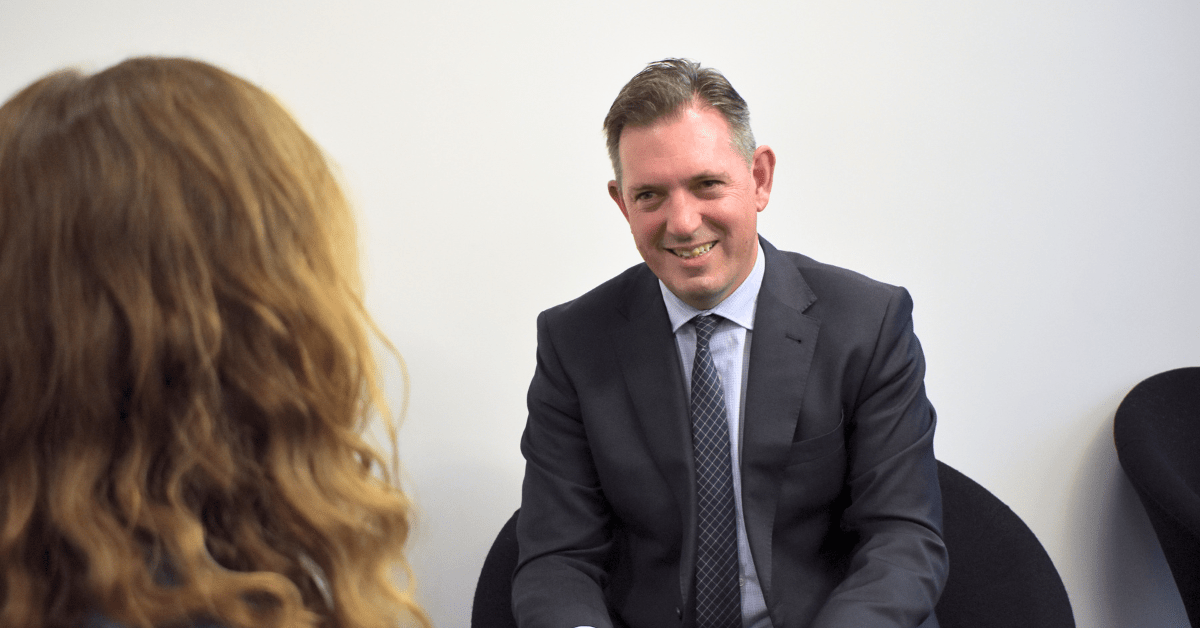
Getting APS recruitment right takes more than asking a set of interview questions and comparing scores at the end. A good panel helps create a fair, consistent and respectful process, one that gives candidates the chance to show what they can do and gives agencies confidence in the final decision. As Adam Kowalski, Director of CBR Recruitment, explains, the best interview panels are prepared, engaged and aware that the candidate experience matters just as much as the assessment itself.
Preparation and engagement are critical
Adam says one of the most important qualities in a panel member is simple: they need to care. “People who genuinely care about the outcome are important,” he says. You might not be hiring for your own team, but good panel members still “want the best people for the department”. When that is the starting point, people listen more carefully, ask better follow-up questions and take the process seriously.
Bring different perspectives into the room
A good panel should not be made up of people who all think the same way. Adam points out that panels work best when they include a mix of people and perspectives because “the whole idea of a panel is that you have different ideas”. In the APS, that matters even more. As Adam says, “the whole idea of the public service is that it’s a sample of the Australian population”, and different communities are represented.
Different perspectives help keep the conversation balanced. They also make it less likely that one person’s view will shape the whole outcome. The best panels make space for discussion, test their assumptions and work towards a fair decision.
Do the groundwork before interviews start
A little planning makes a big difference. Before the first candidate walks in, Adam recommends agreeing on the basics: “Work out how much prompting you can do, work out who’s asking the questions, how you will score candidates and so on. For larger rounds, he says that “if there’s over ten interviews you really have to have some kind of scoring matrix”. That structure helps panels compare candidates more consistently and avoid relying on memory or first impressions.
It is also worth remembering that interviews naturally favour people who can speak confidently about their experience. Adam cautions that “the best candidates… can come across as the ones that can articulate their skills and experience best” in an interview, but they are “not necessarily the best for the job role”. For technical or specialist roles, panels need to think carefully about whether the process is testing the skills the job actually requires; and if not the inclusion of a work sample test can be worthwhile.
Think about the candidate’s experience
During an interview the best candidates are also deciding whether the role, team and organisation feel right for them. If panel members spend the whole interview typing notes or looking disengaged, it can be “really off putting for candidates”. His advice is to be present. If there is a scribe in the room, use that support so the panel can focus on the conversation. Adam says that when “the panel engages with each candidate, and you get more out of each candidate”, everyone benefits. Even people who are not selected should leave feeling they have had a positive experience.
At the end of the day, good APS recruitment is about more than filling a vacancy. It is about using the various tools available within merit-based recruitment to run a selection process that identifies the best candidates for the vacancy. When panel members are prepared, engaged and aware of the candidate experience, they give themselves the best chance of finding the right person for the role.
If you’re planning an APS recruitment round and want support to keep the process structured, fair and candidate-focused, CBR Recruitment can assist. Contact us on 02 6103 7000 or email hello@cbrrecruitment.com.au.