

Categories
Client

3 Ways DiSC Personality Profiles Build Successful Teams

Every team is naturally made up of a range of different people, personalities, and backgrounds, and one of the most important conclusions drawn from personality research is that teams with a range of personalities are more likely to find success. For instance, in stressful situations where negative feelings might fester, team members with more social and agreeable attitudes help mitigate conflict, maintain team optimism, boost morale, and encourage involvement.


The DiSC Model

The DiSC model stands for four personality profiles: Dominance (D), Influence (i), Steadiness (S), and Conscientiousness (C). This model highlights your fears, values, overuses, influences, and approaches to conflict. Each profile has a clear working style, and candidates are assessed on a scale between them.
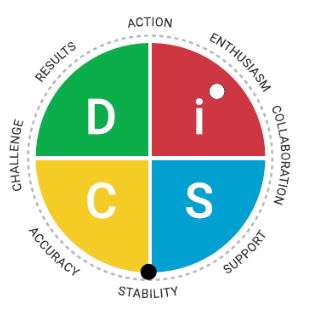
The DiSC Model: four pieces of a pie chart labeled D, I, S, C surrounded by relevant descriptions. Challenge, Results, Action for D. Action, Enthusiasm, Collaboration for i. Collaboration, Support, Stability for S. Stability, Accuracy, Challenge for C.


  • Dominance (D): Confident, results-oriented, and driven by competition and success. Direct, demanding, and strong-willed.
  • Influence (i): Open, relationship-focused, motivated by social recognition and group activities. Warm, trusting, optimistic, and enthusiastic.
  • Steadiness (S): Dependable, cooperation-focused, motivated by opportunities to help and sincere appreciation. Calm, patient, and consistent.
  • Conscientiousness (C): Quality and accuracy-focused, motivated by gaining knowledge and showing expertise. Analytical, systematic, and tactful.


Each style reflects how individuals approach tasks, interact with others, and respond to challenges. Understanding these traits helps leaders build balanced, high-performing teams.


Putting Personality Insights into Practice

Recognising unique strengths helps build diverse and inclusive teams, fostering creativity and innovation. Personality profiling can reveal potential conflict sources, allowing proactive leaders to create a harmonious work environment by:


  1. Facilitating Open Communication: Encourage team members to discuss their personality test results, emphasising that there are no good or bad profiles. This fosters better teamwork without labelling or judgment.
  2. Integrating with Broader Development Programs: Use DiSC as part of a holistic approach to team development, including one-on-one coaching, leadership mentoring, and group workshops. This helps individuals explore growth opportunities and apply insights in real-world scenarios.
  3. Tailoring Training and Support: Design training programs that reflect the behavioural preferences of your team. Whether it’s improving communication, managing change, or enhancing collaboration, DiSC insights can guide more personalised and effective development.


To learn more about how personality profiling can build a successful team for you, encouraging collaboration and positivity, please contact us for more information at hello@cbrrecruitment.com.au or 02 6103 7000.


Categories
Client

6 Key Tips to Prepare Your Team for the New Year

The new year offers a key opportunity to refocus your team, learn from past experiences, and create a clear path for success. Here’s a practical approach to guide your team in setting the tone for a productive and inspiring year ahead:

  1. Start with Clear Goals
    Set a strong foundation by defining clear, actionable goals. Hosting a team retreat or workshop away from daily distractions can help everyone contribute to the planning process. Ensure each goal aligns with the SMART framework—Specific, Measurable, Achievable, Relevant, and Time-Bound—while incorporating some stretch objectives to keep the team motivated.
  1. Reflect and Learn from the Past
    Before planning ahead, take time to review the previous year as a team. Celebrate wins, acknowledge challenges, and extract lessons learned. Honest conversations about past performance pave the way for aligned priorities and improved strategies.
  1. Streamline Processes for Efficiency
    The new year is an ideal time to adopt systems that enhance productivity. Whether it’s a new project management tool, improved communication channels, or updated workflows, involve the team in brainstorming and selecting approaches that address pain points and make daily tasks more efficient.
  1. Create a Unified Team Vision
    Collaboratively crafting a team vision statement establishes a shared sense of purpose. This vision will act as a guide for decision-making and serve as a motivational anchor throughout the year. Regularly revisit the vision to measure progress and ensure everyone remains aligned with the overarching goals.
  1. Invest in Team Building
    Trust and camaraderie are the cornerstones of high-performing teams. Strengthen these bonds through meaningful team-building activities—whether it’s as simple as a team lunch or as structured as a team-building exercise.
  1. Identify and Fill Skills Gaps
    As part of your annual planning process it’s important to identify any skills gaps within your team in conjunction with planned business growth over the year ahead. The start of the year is an ideal time to identify high calibre candidates who may be looking for an interesting opportunity within a progressive organisation.

Annual planning isn’t just about setting goals; it’s about contextualizing them within the team’s unique dynamics and broader business objectives. From analysing past performance to identifying focus areas, the planning process should include actionable steps, measurable outcomes, and clear timelines.

For assistance with your recruitment, business planning or strategic HR needs, please give us a call on 02 6103 7000, or email hello@CBRrecruitment.com.au.

Categories
Client

5 Traits of an Effective Leader

Effective leadership is crucial in setting the mission, vision and strategic direction of every organization and is also a way of attracting the best staff. Leaders who can define clear outcomes and help their team members leverage their strengths are invaluable, and can foster a high performing culture within your organization. Here are five key tips to enhance your leadership skills to achieve the perfect team:

1. Communicate Clearly

Clear communication is the foundation of good leadership. As a leader, it’s crucial to articulate expectations, goals, and feedback effectively. When your team knows exactly what is expected of them, they are more likely to perform at their best. Misunderstandings and uncertainties can lead to confusion and decreased productivity. Always strive to be clear, concise, consistent and open in your communication.

2. Engage and Know Your Team

Great leaders understand their team members’ strengths and weaknesses. They engage with their followers, building strong relationships based on trust and mutual respect. Having regular, non-work-related conversations can help build this connection and can also give you a better understanding of anything which is potentially impacting the lives of your team members. When people feel valued and understood, they are more motivated and committed to their roles.

3. Focus on Strengths, Not Weaknesses

While it’s important to be aware of weaknesses, the best leaders focus on leveraging strengths. They help individuals put their talents to use to achieve the desired outcomes. This approach not only enhances performance but also boosts morale and job satisfaction. By concentrating on what team members do best, leaders can foster a more productive and positive work environment.

4. Keep an Open Mind

Effective leaders are open-minded and receptive to new ideas and perspectives. They understand that innovation often comes from different points of view. Encouraging team members to share their ideas and provide constructive criticism, within an environment of psychological safety, can lead to better decision-making and problem-solving. An open-minded leader is also resilient, adaptable, able to navigate changes and challenges.

5. Never Stop Learning

Leaders should always seek to improve their skills and knowledge, particularly in the areas of leadership and management; whether through formal education, professional development programs, or staying informed about industry trends. This commitment to learning not only enhances their own capabilities but also sets an example for their team.

To find out more about CBR Recruitment leadership coaching services please call 02 6103 7000 or email hello@cbrrecruitment.com.au.

Categories
Client

Mastering the Art of Interviewing: How to Win Over High-Calibre Candidates

Finding the perfect candidates for your interviews is just the beginning. With competitive talent becoming scarcer and candidates getting pickier, it’s time we all learn to improve our interview style. Today, interviews are more about convincing the perfect candidate you’re the right choice than it is the candidate convincing you to hire them. You’re going to have to work harder, and smarter, to catch that talent. Here’s how you convince them to stay.

How to prepare

The interview is crucial in both your understanding of the candidate and their understanding of the workplace. Chances are, they know more about you than you know about them. A good way to prepare, both for yourself and your candidate, is to look at it from their point of view. Think about the last time you went through an interview. Assess what you found useful or nerve-wracking and use your own experiences to make the process as comfortable and balanced as possible.

Create Comfort

Interviews are always stressful, and sometimes this can cost you a candidate. Minimising this to the best of your ability is important to ensure they see you positively, and you don’t scare them away. Try to provide as much information as possible, what to wear, where to go, and what you’ll be talking about are all great things to let your candidate know.

Pick the Perfect Location

Location is always important. Just like meeting someone new, the first impression can make or break you. Anywhere too noisy might distract from the importance of the conversation, but performing the interview at the office might distance you socially or make the candidate nervous. Choosing an environment where you’re both comfortable to express what you’re looking for and need from each other could be pivotal to the answer you get after putting out an offer.

Write Your Best Questions

The questions you ask your candidate will form the foundation of your professional relationship. If you want to start off friendly, try beginning with a casual conversation. Something deeper than the weather, but nothing so personal as family. When it comes to the questions themselves, while asking for their greatest weakness might seem like a time-saver, what does it actually tell you? Most likely, such a direct question will get you a rehearsed answer. What you’re going for is authenticity. Ask about their work life, what they enjoy about their current job, or what they think about your company.


In the Interview

Think about the perfect ‘fit’

Making sure your team fits together like a puzzle is important in creating a strong workplace culture. Consider whether they will get along, or if you could grow together. Think about their future potential, who they could be in a years’ time. Remember, the person you meet at interview might change when you get to know them. Ask them questions you think will show what their values are and see if yours align.


Let them ask you questions:

Have a bit of back and forth with them. If you make the interview feel like a conversation, you’re more likely to get a well-rounded view of the candidate, and they will better understand you and the workplace culture you’re a part of. In addition, the questions they ask will often tell you about their thought processes. Or, how interested they really are. Letting your candidates interview you helps them to better understand your company, and it demonstrates that you value their opinions and concerns.

Sell the role

The interview is as much for you as it is for them. If you like the candidate, spend a bit of time highlighting the role and workplace. They’re not likely to say yes to an offer if you don’t let them know what a great opportunity it is. Chances are, there are other options and employers who are looking for candidates just like you are. So, feel free to really sell it.


Maintaining a strong and convincing interview process can be challenging and time consuming. If you find you don’t have the time or ability to find the high calibre candidates you need, we can take all the hassle out of it for you. Our recruitment services are all-encompassing and personalised to your needs to help you attract the best talent in the market.


Times are changing, and so are your candidates. If you don’t meet them where they are, chances are you’ll be losing out on high quality talent. It’s important to emphasise how important your staff are in your workplace through how you coordinate your interviews, how comfortable your candidates feel, and how well they understand your values. Using these tips in your interview might just help you in securing your dream team. So, be bold, be friendly, and win over that candidate!

Categories
Candidate Client

“Hard Skills” and “Soft Skills” – what are they and why is it important to know?

Every job that is carried out by a human contains a mix of what we call “hard skills” and “soft skills”. These vary according to the job, the organisation, and often the organisation’s willingness to train candidates in any potential skill gaps they might have.

What are Hard Skills?

Broadly speaking, “hard skills” refer to tangible or technical skills. This can include degrees, knowledge of a particular language, or aptitude in a computer application. The way to consider “hard skills” from a practical perspective is that a candidate’s proficiency in these areas can usually be assessed by some kind of test, or a measurement of competence, such as a certification or a degree.

What are Soft Skills?

“Soft skills” on the other hand, are much harder to quantify. They cover things like leadership, problem solving ability, multitasking, communication, and reliability. In the recruitment industry we often call these skills the “intangibles” of a role. They often correlate very closely to the overall “fit” of an employee within an organization.

As a general rule “soft skills” cannot be assessed by reading a candidate’s CV. EVERYONE says they have strong leadership skills, great communication skills, or a strong attention to detail. What are great leadership skills? What are great communication skills?

How do we assess soft skills?

CBR Recruitment assists our clients by assessing the “soft skills” of candidates through the candidate registration process. Every candidate who registers with us undertakes a preliminary competency-based interview with an experienced Recruitment Consultant. They are asked to provide examples of situations where they: planned and organized their time; communicated with influence; solved a problem; contributed to a team; and led others to achieve outcomes. This assessment can be bolstered with CBR Recruitment’s DiSC behavioral profiling service, where a candidate’s natural work style, team cohesion and behavior in the workplace can be assessed.

The bottom line is that if an outstanding candidate is lacking a hard skill, such as lack of experience in a particular computer application, this can easily be resolved with some training. However, a general manager who is lacking a soft skill such as effective leadership ability is a much bigger problem!