

Categories
Client

Wellbeing At Work Is Everyone’s Responsibility

As the world of work continues to evolve, one truth is becoming clearer: psychological and mental well-being isn’t something an organisation can “provide” on its own. While employers set the environment, policies, and culture, the responsibility for well-being is shared. Leaders, managers, and employees all contribute to creating a workplace where people feel supported, safe, and able to thrive. In 2026, the most resilient workplaces will be those where wellbeing is a collaborative effort; not a top-down initiative.


Why Support Needs to Be Collective

Modern working life brings new pressures. Rising living costs and economic uncertainty affect how secure people feel, both personally and professionally. At the same time, rapid technological change means many employees are navigating shifting expectations, learning curves, and new interpretations of what their future career might look like.

These pressures don’t fall on one person or group alone.

  • Employers create the conditions for support.
  • Managers observe, listen, and act early.
  • Employees contribute by communicating needs, setting boundaries, and supporting teammates.

When everyone engages, psychological wellbeing becomes part of everyday practice rather than just a policy on paper.


Everyday Proactivity: What Each Person Can Do

A mentally healthy workplace isn’t built by a single program; it’s built through consistent, shared behaviour.

Employers can:

  • Promote transparency and open communication
  • Equip managers with skills to recognise early signs of stress
  • Create channels for regular listening and feedback
  • Set expectations that encourage sustainable workload habits

Managers can:

  • Check in regularly, not just about tasks but about energy and capacity
  • Encourage breaks, rest, and realistic goals
  • Model healthy behaviour (logging off on time, taking leave, managing digital overload)
  • Notice when people withdraw, disengage, or show signs of strain

Employees can:

  • Speak up early when pressures are building
  • Participate in wellbeing practices (surveys, check ins, workshops)
  • Support teammates through respectful communication and collaboration
  • Establish personal boundaries that protect mental energy
  • Engage in self-care practices both in and out of work

Even small actions matter and a workplace becomes psychologically safe when everyone contributes.


How CBR Recruitment Can Help

At CBR Recruitment, we help organisations build cultures where wellbeing is everyone’s responsibility, and everyone feels empowered to contribute. We offer tailored HR policies, leadership development, and team programs designed to strengthen communication, collaboration, and psychological safety. If you’re ready to build a healthier, more resilient workplace in 2026, we’re here to help. Contact Shelley Kowalski our in-house HR Practitioner on 02 6103 7000 or by emailing hello@cbrrecruitment.com.au for more information.

Categories
Client

3 Ways DiSC Personality Profiles Build Successful Teams

Every team is naturally made up of a range of different people, personalities, and backgrounds, and one of the most important conclusions drawn from personality research is that teams with a range of personalities are more likely to find success. For instance, in stressful situations where negative feelings might fester, team members with more social and agreeable attitudes help mitigate conflict, maintain team optimism, boost morale, and encourage involvement.


The DiSC Model

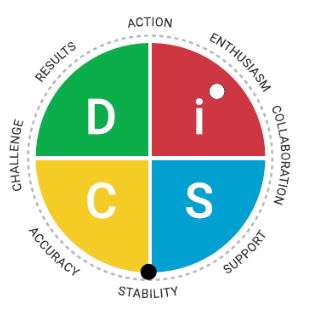
The DiSC model stands for four personality profiles: Dominance (D), Influence (i), Steadiness (S), and Conscientiousness (C). This model highlights your fears, values, overuses, influences, and approaches to conflict. Each profile has a clear working style, and candidates are assessed on a scale between them.

The DiSC Model: four pieces of a pie chart labeled D, I, S, C surrounded by relevant descriptions. Challenge, Results, Action for D. Action, Enthusiasm, Collaboration for i. Collaboration, Support, Stability for S. Stability, Accuracy, Challenge for C.


  • Dominance (D): Confident, results-oriented, and driven by competition and success. Direct, demanding, and strong-willed.
  • Influence (i): Open, relationship-focused, motivated by social recognition and group activities. Warm, trusting, optimistic, and enthusiastic.
  • Steadiness (S): Dependable, cooperation-focused, motivated by opportunities to help and sincere appreciation. Calm, patient, and consistent.
  • Conscientiousness (C): Quality and accuracy-focused, motivated by gaining knowledge and showing expertise. Analytical, systematic, and tactful.


Each style reflects how individuals approach tasks, interact with others, and respond to challenges. Understanding these traits helps leaders build balanced, high-performing teams.


Putting Personality Insights into Practice

Recognising unique strengths helps build diverse and inclusive teams, fostering creativity and innovation. Personality profiling can reveal potential conflict sources, allowing proactive leaders to create a harmonious work environment by:


  1. Facilitating Open Communication: Encourage team members to discuss their personality test results, emphasising that there are no good or bad profiles. This fosters better teamwork without labelling or judgment.
  2. Integrating with Broader Development Programs: Use DiSC as part of a holistic approach to team development, including one-on-one coaching, leadership mentoring, and group workshops. This helps individuals explore growth opportunities and apply insights in real-world scenarios.
  3. Tailoring Training and Support: Design training programs that reflect the behavioural preferences of your team. Whether it’s improving communication, managing change, or enhancing collaboration, DiSC insights can guide more personalised and effective development.


To learn more about how personality profiling can build a successful team for you, encouraging collaboration and positivity, please contact us for more information at hello@cbrrecruitment.com.au or 02 6103 7000.

Categories
Client

Integrating AI into your organisation: Why smart hiring is the key to success

Artificial Intelligence (AI) is no longer a futuristic concept it’s a present-day catalyst for transformation across industries. From automating routine tasks to unlocking powerful data insights, AI is reshaping how organizations operate, compete, and grow. But while the technology itself is revolutionary, its true potential is only realized when paired with the right people. At CBR Recruitment, we believe that integrating AI into your business isn’t just a tech upgrade it’s a cultural shift, which demands smart hiring.

AI + People = Innovation

AI can streamline operations, but it’s your team that will determine how effectively it’s adopted. The most successful organizations aren’t just investing in AI tools they’re recruiting individuals who can embrace change, adapt quickly, and champion innovation. These are the people who ask, “How can we do this better?” and aren’t afraid to experiment with new processes. They’re not just tech savvy they’re transformation-savvy.

What to look for in AI-ready talent

Curiosity and Learning Agility: AI evolves rapidly. Employees who are eager to learn and stay ahead of trends will help your business remain competitive.

Change Resilience: AI can disrupt traditional workflows. Look for candidates who thrive in dynamic environments and see change as opportunity.

Process-Oriented Thinking: AI is most effective when paired with optimized processes. Hire people who can identify inefficiencies and reimagine workflows.

Collaborative Mindset: AI adoption often spans departments. Seek individuals who can work cross-functionally and communicate effectively with both technical and non-technical people.

Hiring for the future, not just the role

Smart hiring means thinking beyond the job description. It’s about building a team that can evolve with your business. At CBR Recruitment, we help clients identify candidates who not only meet today’s needs but are also equipped to lead tomorrow’s innovations. Whether you’re hiring a Data Analyst, Operations Manager, or Customer Experience Lead, we focus on finding professionals who understand the value of AI and are ready to harness it to drive meaningful change.

To speak to one of our Consultants about how to recruit people into your organization who can embrace AI, please contact us by sending us an enquiry or by calling 02 6103 7000.

Categories
Client

Why Embracing Neurodiversity in the Workplace Matters

Neurodiversity in the workplace is no longer just about inclusion, it’s becoming a strategic advantage. As organisations recognise the value of cognitive diversity, they’re discovering that neurodivergent employees bring fresh perspectives, creative problem-solving skills, and untapped potential. Neurodiversity refers to the natural variation in how people think and learn, including conditions like autism, ADHD, and dyslexia.

Organisations that adapt their environments and hiring practices to support neurodiverse talent gain a competitive edge in innovation, productivity, and employee satisfaction.

How to Create an Inclusive Workplace for Neurodivergent Employees

Building an inclusive workplace starts with management training and organisation-wide education. Employers should prioritise the following:

  • Neurodiversity training programs to educate staff about autism, ADHD, dyslexia, and other conditions.
  • Flexible communication methods, such as providing meeting agendas in advance or offering visual and written formats.
  • Accessible workspaces that support different sensory needs, such as quiet areas, adjustable lighting, and noise-cancelling headphones.
  • Flexible schedules that accommodate different energy levels and routines.

Small adjustments like these lead to big gains in employee engagement and team performance.

Moving Beyond the Traditional Interview

Traditional interviews often disadvantage neurodivergent candidates. Many individuals on the autism spectrum, for example, may struggle with eye contact or social cues, despite having exceptional technical skills or creative thinking abilities.

You can redesigned your hiring practices by:

  • Using nontraditional assessments like group projects or informal “hangouts” to evaluate skills.
  • Partnering with organisations which specialise in placing neurodiverse talent.
  • Offering trial periods or project-based evaluations to let candidates demonstrate their strengths over time.

These inclusive hiring practices create opportunities for neurodivergent employees to thrive.

Support Systems

To ensure long-term success, organisations must go beyond onboarding and build support systems that empower neurodivergent employees. SAP, for example, has created dual “support circles” – one in the workplace and one in the personal sphere. These include:

  • A team manager and mentor
  • A workplace buddy
  • A job and life skills coach
  • An HR partner overseeing neurodiverse participants

This structure ensures that neurodivergent staff are supported holistically, both professionally and personally, leading to better retention and team collaboration.

Business Benefits

The benefits of embracing neurodiversity go far beyond reputation. Organisations that invest in inclusive work environments report:

  • Increased innovation and problem-solving
  • Improved productivity and work quality
  • Greater employee engagement
  • Higher team morale and collaboration

Perhaps most importantly, managers become more aware of how to support the entire team, leading to more human-centred leadership across the board.

Neurodiversity in the workplace challenges organisations to rethink traditional definitions of talent. Inclusive hiring practices, flexible environments, and intentional support structures unlock the unique abilities of neurodivergent employees, boosting innovation and strengthening workplace culture. By embracing neurodiversity, you’re building smarter, more agile teams for the future.

Want to learn how to build a neuro-inclusive workplace? CBR Recruitment can help you develop modern HR and recruitment strategies that support neurodiverse talent and give you a broader lens on identifying potential. Whether you’re rethinking your hiring process, seeking inclusive policy advice, or looking to improve team engagement, our experts can guide you through practical, high-impact changes.

Categories
Client

6 Key Tips to Prepare Your Team for the New Year

The new year offers a key opportunity to refocus your team, learn from past experiences, and create a clear path for success. Here’s a practical approach to guide your team in setting the tone for a productive and inspiring year ahead:

  1. Start with Clear Goals
    Set a strong foundation by defining clear, actionable goals. Hosting a team retreat or workshop away from daily distractions can help everyone contribute to the planning process. Ensure each goal aligns with the SMART framework—Specific, Measurable, Achievable, Relevant, and Time-Bound—while incorporating some stretch objectives to keep the team motivated.
  1. Reflect and Learn from the Past
    Before planning ahead, take time to review the previous year as a team. Celebrate wins, acknowledge challenges, and extract lessons learned. Honest conversations about past performance pave the way for aligned priorities and improved strategies.
  1. Streamline Processes for Efficiency
    The new year is an ideal time to adopt systems that enhance productivity. Whether it’s a new project management tool, improved communication channels, or updated workflows, involve the team in brainstorming and selecting approaches that address pain points and make daily tasks more efficient.
  1. Create a Unified Team Vision
    Collaboratively crafting a team vision statement establishes a shared sense of purpose. This vision will act as a guide for decision-making and serve as a motivational anchor throughout the year. Regularly revisit the vision to measure progress and ensure everyone remains aligned with the overarching goals.
  1. Invest in Team Building
    Trust and camaraderie are the cornerstones of high-performing teams. Strengthen these bonds through meaningful team-building activities—whether it’s as simple as a team lunch or as structured as a team-building exercise.
  1. Identify and Fill Skills Gaps
    As part of your annual planning process it’s important to identify any skills gaps within your team in conjunction with planned business growth over the year ahead. The start of the year is an ideal time to identify high calibre candidates who may be looking for an interesting opportunity within a progressive organisation.

Annual planning isn’t just about setting goals; it’s about contextualizing them within the team’s unique dynamics and broader business objectives. From analysing past performance to identifying focus areas, the planning process should include actionable steps, measurable outcomes, and clear timelines.

For assistance with your recruitment, business planning or strategic HR needs, please give us a call on 02 6103 7000, or email hello@CBRrecruitment.com.au.

Categories
Client

5 Traits of an Effective Leader

Effective leadership is crucial in setting the mission, vision and strategic direction of every organization and is also a way of attracting the best staff. Leaders who can define clear outcomes and help their team members leverage their strengths are invaluable, and can foster a high performing culture within your organization. Here are five key tips to enhance your leadership skills to achieve the perfect team:

1. Communicate Clearly

Clear communication is the foundation of good leadership. As a leader, it’s crucial to articulate expectations, goals, and feedback effectively. When your team knows exactly what is expected of them, they are more likely to perform at their best. Misunderstandings and uncertainties can lead to confusion and decreased productivity. Always strive to be clear, concise, consistent and open in your communication.

2. Engage and Know Your Team

Great leaders understand their team members’ strengths and weaknesses. They engage with their followers, building strong relationships based on trust and mutual respect. Having regular, non-work-related conversations can help build this connection and can also give you a better understanding of anything which is potentially impacting the lives of your team members. When people feel valued and understood, they are more motivated and committed to their roles.

3. Focus on Strengths, Not Weaknesses

While it’s important to be aware of weaknesses, the best leaders focus on leveraging strengths. They help individuals put their talents to use to achieve the desired outcomes. This approach not only enhances performance but also boosts morale and job satisfaction. By concentrating on what team members do best, leaders can foster a more productive and positive work environment.

4. Keep an Open Mind

Effective leaders are open-minded and receptive to new ideas and perspectives. They understand that innovation often comes from different points of view. Encouraging team members to share their ideas and provide constructive criticism, within an environment of psychological safety, can lead to better decision-making and problem-solving. An open-minded leader is also resilient, adaptable, able to navigate changes and challenges.

5. Never Stop Learning

Leaders should always seek to improve their skills and knowledge, particularly in the areas of leadership and management; whether through formal education, professional development programs, or staying informed about industry trends. This commitment to learning not only enhances their own capabilities but also sets an example for their team.

To find out more about CBR Recruitment leadership coaching services please call 02 6103 7000 or email hello@cbrrecruitment.com.au.

Categories
Client

How to Effectively Manage Temporary Staff

Using the services of temporary staff can be hugely beneficial to a wide range of organizations, and can be useful for either filling a “resource gap” created by a permanent staff member being on unplanned or long-term leave; or as a way of bringing specialist skills or experience into your organization for a finite period of time. It can also be a really good way of trialling a candidate in a particular role before offering them a permanent employment opportunity. Effectively onboarding and managing temporary staff is crucial to ensure they seamlessly integrate with your team and contribute to your organizational objectives. There are several key practical differences in how you would manage a temporary staff member:

Revise your onboarding process

If you already have a clear onboarding process, consider condensing it to accurately convey the essential information about your company culture, goals, and tasks. This approach will help your temporary staff member to understand the procedures they need to follow, office protocols and so on. The most important aspect is to undertake a WHS induction with the temporary staff member to ensure they are working within a safe working environment. While the recruitment agency is technically the employer of the temporary staff member and has the ultimate responsibility for any injuries that occur in the workplace, the host employer also has an obligation to provide a safe workplace and support the management of this risk.

Provide clear guidelines

Getting temporary employees up and running quickly is always most effective if the guidelines and expectations are clear, and this comes down to open communication. Providing them with a detailed understanding of their role and tasks ensures they can deliver outcomes and have a positive impact within a short period of time. Working with a skilled Recruitment Consultant is also very beneficial as they will identify a high calibre candidate who meets the job brief; often they will also be able to communicate the expectations and deliverables before the temporary staff member commences and throughout the duration of the contract.

Be transparent

It’s important to be transparent about the temporary nature of their employment and the potential for permanent opportunities. Clearly outline their role trajectory to manage expectations effectively. Whether they have aspirations for permanent positions or prefer to work on a contract basis, clarity around their role progression, or the extension or early cessation of their contract is essential. This is usually done either directly by, or with the support of, your Recruitment Consultant.


CBR Recruitment has a pool of high-calibre temporary staff who are interviewed, reference checked and vetted, who can commence in temporary positions at short notice. We look after all of their employment obligations and work in partnership with you to ensure the engagement is successful and you have the utmost flexibility. If you’re thinking about taking on temporary staff, please do not hesitate to contact us on 02 6103 7000 or email hello@cbrrecruitment.com.au.

Categories
Client

Shortlisting for Success – 3 Insider Tips!

Choosing candidates to interview can be a challenge, particularly when you have a popular role on offer and an abundance of applicants. There are a range of tips and tricks that can help you better understand your candidates and how they would suit your organisation. From decoding CVs to discerning hidden talents, there are some key strategies that can help you shortlist a position successfully.


Understand their values and interests

One of the most important things to understand when you’re shortlisting candidates for your team is how to look for cultural fit. If you read a CV holistically you can usually gain a good understanding of a candidate’s hobbies and interests, how career driven they are, whether they have taken time away from work to travel overseas and so on. It’s also important to remember that a job application and CV will only tell you so much, so we can’t under-emphasize the value in making that initial phone call to candidate to talk about their background, skills, experience and career goals, and also gaining an understanding if they have a genuine interest in the specific role they have applied for.

Know the red flags

There are a range of things to look out for when assessing your candidates and looking over their CVs and applications. It’s important to be discerning when reading resumes, taking note of any missing information or gaps. Significant gaps in employment are a reason for concern, and raises the question of how the candidate could afford to live over that period. Understanding why they left their last job or why they want to leave their current job is also important as this can show you how well they work in a team, or how they don’t. Job hopping without legitimate reasons can suggest a lack of commitment, or a lack of specific career goals.

Understand their work experience and job roles

Usually when reviewing job applications and CVs we are on the lookout for career progression over time. This doesn’t necessarily mean changing jobs or organisations, however it is a good sign if a candidate is taking on additional responsibilities, putting their hand up for promotions, or acting in leadership opportunities when managers are away. This shows that the candidate has natural leadership ability, and is most likely a high performer, rather than someone who plods along in their role.


In summary, shortlisting takes a good eye, sound judgement, and plenty of practice. By incorporating the strategies we have outlined here, you can not only identify the best-suited candidates for your vacancy; you can build a highly skilled team that aligns with your values and can drive your organization forward.

Categories
Client

Three reasons why getting a temp makes good sense…

There are a range of benefits to engaging temporary staff, who can be a huge asset to your organisation to increase capacity through periods of staff leave, or as a way of bringing in additional expertise to support growth or special projects. Gone are the days when temps were engaged to “fill a seat” – they can bring a raft of valuable skills and experience to your team without the ongoing employment obligations.

Flexibility

Temporary staff offer a flexible approach to challenging situations. This can include things such as staff leave, long recruitment processes and resourcing crunches. In the current employment market sometimes, it can take a long time to find the perfect candidate to fill your vacancies, and engaging someone temporarily during that time can help you and your team manage the workload. Temporary staff are there to start instantly and won’t need the time to adjust and work their way into the team that someone permanent would. As there are no ongoing employment obligations it’s also a good opportunity for you to “try before you buy”. If they prove to be a valuable asset to your team, you can always extend them or employ them permanently.

Skills

There are often times when you get a new project that needs a very specific skillset, and engaging someone temporarily or on a contract can offer you the ability to find those skills and deliver your project. At the same time, having someone specialized on your team can offer a fresh perspective and new ideas. This can give you the opportunity for change and improvement for the future.

Capacity

Similarly, large projects or transformations in your business might need a larger team to meet the deadline or objective. Temp staff offer you a quick solution to scale up your workforce. Having more staff for these high-pressure moments can help your team evade burnout and stress, boosting morale and ultimately giving you a better end product.


In any workplace, adaptability and agility are key to success. Temporary staff offer a multitude of benefits that can significantly impact your team’s performance and overall outcomes. Our Consultants understand the importance of finding the right temporary staff to meet your evolving needs. All of our temporary staff are extensively vetted, and on top of that we look after all of their employment obligations, giving you peace of mind and complete flexibility. For more information on our temporary recruitment services, please do not hesitate to contact us on 02 6103 7000 or email hello@cbrrecruitment.com.au.

Categories
Client

Mastering the Art of Interviewing: How to Win Over High-Calibre Candidates

Finding the perfect candidates for your interviews is just the beginning. With competitive talent becoming scarcer and candidates getting pickier, it’s time we all learn to improve our interview style. Today, interviews are more about convincing the perfect candidate you’re the right choice than it is the candidate convincing you to hire them. You’re going to have to work harder, and smarter, to catch that talent. Here’s how you convince them to stay.

How to prepare

The interview is crucial in both your understanding of the candidate and their understanding of the workplace. Chances are, they know more about you than you know about them. A good way to prepare, both for yourself and your candidate, is to look at it from their point of view. Think about the last time you went through an interview. Assess what you found useful or nerve-wracking and use your own experiences to make the process as comfortable and balanced as possible.

Create Comfort

Interviews are always stressful, and sometimes this can cost you a candidate. Minimising this to the best of your ability is important to ensure they see you positively, and you don’t scare them away. Try to provide as much information as possible, what to wear, where to go, and what you’ll be talking about are all great things to let your candidate know.

Pick the Perfect Location

Location is always important. Just like meeting someone new, the first impression can make or break you. Anywhere too noisy might distract from the importance of the conversation, but performing the interview at the office might distance you socially or make the candidate nervous. Choosing an environment where you’re both comfortable to express what you’re looking for and need from each other could be pivotal to the answer you get after putting out an offer.

Write Your Best Questions

The questions you ask your candidate will form the foundation of your professional relationship. If you want to start off friendly, try beginning with a casual conversation. Something deeper than the weather, but nothing so personal as family. When it comes to the questions themselves, while asking for their greatest weakness might seem like a time-saver, what does it actually tell you? Most likely, such a direct question will get you a rehearsed answer. What you’re going for is authenticity. Ask about their work life, what they enjoy about their current job, or what they think about your company.


In the Interview

Think about the perfect ‘fit’

Making sure your team fits together like a puzzle is important in creating a strong workplace culture. Consider whether they will get along, or if you could grow together. Think about their future potential, who they could be in a years’ time. Remember, the person you meet at interview might change when you get to know them. Ask them questions you think will show what their values are and see if yours align.


Let them ask you questions:

Have a bit of back and forth with them. If you make the interview feel like a conversation, you’re more likely to get a well-rounded view of the candidate, and they will better understand you and the workplace culture you’re a part of. In addition, the questions they ask will often tell you about their thought processes. Or, how interested they really are. Letting your candidates interview you helps them to better understand your company, and it demonstrates that you value their opinions and concerns.

Sell the role

The interview is as much for you as it is for them. If you like the candidate, spend a bit of time highlighting the role and workplace. They’re not likely to say yes to an offer if you don’t let them know what a great opportunity it is. Chances are, there are other options and employers who are looking for candidates just like you are. So, feel free to really sell it.


Maintaining a strong and convincing interview process can be challenging and time consuming. If you find you don’t have the time or ability to find the high calibre candidates you need, we can take all the hassle out of it for you. Our recruitment services are all-encompassing and personalised to your needs to help you attract the best talent in the market.


Times are changing, and so are your candidates. If you don’t meet them where they are, chances are you’ll be losing out on high quality talent. It’s important to emphasise how important your staff are in your workplace through how you coordinate your interviews, how comfortable your candidates feel, and how well they understand your values. Using these tips in your interview might just help you in securing your dream team. So, be bold, be friendly, and win over that candidate!