
Categories
Candidate

Five Tips for Promotion in the APS

Winning a promotion in the Australian Public Service can be a challenge, particularly as you move into more senior positions where there is more competition. It can be particularly difficult as you transition into executive level positions and your focus changes from being a subject matter expert to a leader. While there is no exact route that promises you will achieve what you’re looking for, if you put the time and effort into the right areas, your chances of success will significantly improve. Here are five key tips that will help you get there faster.

Build Relationships and Engage with Others

Communication is one of the most important things to focus on when you’re trying to move into a more senior role, particularly as your responsibilities will start to focus more on leading people and influencing internal and external stakeholders. One of the people you’ll want to be talking to is your direct manager, letting them know what you’re looking for and asking for any opportunities they could offer to you. You need to work toward convincing your manager that you are capable of taking on those extra responsibilities and that you have the skills and mindset to work through the more complex challenges. Similarly, having a preference for working alone can have a negative impact on your chances if you can’t engage with others at the same time. Leaders need to be approachable and to act as the strategic connection between the team and upper management, so it is crucial to be able to communicate effectively both upwards and downwards, no matter where you are in your career.

Upskill Yourself

Building up your skills and education can provide you with strong foundations and convey that you are willing to put in the extra work to benefit your team and career. It is important that you show you want to learn more and are interested in your work and industry. Having that ability to learn more will convey how you can better your team and workplace. As you learn more about your role, you will begin to master it. Doing some leadership-related study also looks great on your CV, shows you’re ambitious, and can help you work with others more effectively.

Take on Opportunities

You might be seeing openings appearing within your team to lead or manage projects. Taking the initiative to grasp the opportunities in front of you can give you the boost of experience you need to convince your manager that you can do something bigger. At the same time, you can start to keep evidence of your achievements, working to understand your mistakes and reflect on them to inform your actions later on. Working in a taskforce, or having some acting experience looks great on your CV and will give you some excellent examples you can draw upon in your application or during your interview. It’s a great way to be able to demonstrate your competence at a particular level.

Start Working Strategically

Those who are looking to become successful managers have to understand how to identify trends that could have an impact on their team and be able to plan how to move past them. You need to understand the goals of your organization, division or section and to be able to convey these to others. Leaders are often very skilled at translating the strategic vision to the practical objectives of the team and are also usually very good at “horizon scanning” for potential issues which could impact the organization, division or section in the future.

Never Assume

Most importantly, when you are applying for, and interviewing for a promotion, one of the traps is to assume that the people interviewing you have an understanding of you or your work. During an interview, be sure not to rely on any assumed knowledge, give full and well-rounded examples and if you are applying for a promotion be sure to provide examples with the right level of complexity to demonstrate your competence at that level. Remember, your interview is your time to shine so be sure to put your best foot forward.


Winning a promotion can be a long and complicated process, often with the occasional setback, but if you utilize these tips you are certainly well on your way!

Categories
Client

Three reasons why getting a temp makes good sense…

There are a range of benefits to engaging temporary staff, who can be a huge asset to your organisation to increase capacity through periods of staff leave, or as a way of bringing in additional expertise to support growth or special projects. Gone are the days when temps were engaged to “fill a seat” – they can bring a raft of valuable skills and experience to your team without the ongoing employment obligations.

Flexibility

Temporary staff offer a flexible approach to challenging situations. This can include things such as staff leave, long recruitment processes and resourcing crunches. In the current employment market sometimes, it can take a long time to find the perfect candidate to fill your vacancies, and engaging someone temporarily during that time can help you and your team manage the workload. Temporary staff are there to start instantly and won’t need the time to adjust and work their way into the team that someone permanent would. As there are no ongoing employment obligations it’s also a good opportunity for you to “try before you buy”. If they prove to be a valuable asset to your team, you can always extend them or employ them permanently.

Skills

There are often times when you get a new project that needs a very specific skillset, and engaging someone temporarily or on a contract can offer you the ability to find those skills and deliver your project. At the same time, having someone specialized on your team can offer a fresh perspective and new ideas. This can give you the opportunity for change and improvement for the future.

Capacity

Similarly, large projects or transformations in your business might need a larger team to meet the deadline or objective. Temp staff offer you a quick solution to scale up your workforce. Having more staff for these high-pressure moments can help your team evade burnout and stress, boosting morale and ultimately giving you a better end product.


In any workplace, adaptability and agility are key to success. Temporary staff offer a multitude of benefits that can significantly impact your team’s performance and overall outcomes. Our Consultants understand the importance of finding the right temporary staff to meet your evolving needs. All of our temporary staff are extensively vetted, and on top of that we look after all of their employment obligations, giving you peace of mind and complete flexibility. For more information on our temporary recruitment services, please do not hesitate to contact us on 02 6103 7000 or email hello@cbrrecruitment.com.au.

Categories
Client

Mastering the Art of Interviewing: How to Win Over High-Calibre Candidates

Finding the perfect candidates for your interviews is just the beginning. With competitive talent becoming scarcer and candidates getting pickier, it’s time we all learn to improve our interview style. Today, interviews are more about convincing the perfect candidate you’re the right choice than it is the candidate convincing you to hire them. You’re going to have to work harder, and smarter, to catch that talent. Here’s how you convince them to stay.

How to prepare

The interview is crucial in both your understanding of the candidate and their understanding of the workplace. Chances are, they know more about you than you know about them. A good way to prepare, both for yourself and your candidate, is to look at it from their point of view. Think about the last time you went through an interview. Assess what you found useful or nerve-wracking and use your own experiences to make the process as comfortable and balanced as possible.

Create Comfort

Interviews are always stressful, and sometimes this can cost you a candidate. Minimising this to the best of your ability is important to ensure they see you positively, and you don’t scare them away. Try to provide as much information as possible, what to wear, where to go, and what you’ll be talking about are all great things to let your candidate know.

Pick the Perfect Location

Location is always important. Just like meeting someone new, the first impression can make or break you. Anywhere too noisy might distract from the importance of the conversation, but performing the interview at the office might distance you socially or make the candidate nervous. Choosing an environment where you’re both comfortable to express what you’re looking for and need from each other could be pivotal to the answer you get after putting out an offer.

Write Your Best Questions

The questions you ask your candidate will form the foundation of your professional relationship. If you want to start off friendly, try beginning with a casual conversation. Something deeper than the weather, but nothing so personal as family. When it comes to the questions themselves, while asking for their greatest weakness might seem like a time-saver, what does it actually tell you? Most likely, such a direct question will get you a rehearsed answer. What you’re going for is authenticity. Ask about their work life, what they enjoy about their current job, or what they think about your company.


In the Interview

Think about the perfect ‘fit’

Making sure your team fits together like a puzzle is important in creating a strong workplace culture. Consider whether they will get along, or if you could grow together. Think about their future potential, who they could be in a years’ time. Remember, the person you meet at interview might change when you get to know them. Ask them questions you think will show what their values are and see if yours align.


Let them ask you questions:

Have a bit of back and forth with them. If you make the interview feel like a conversation, you’re more likely to get a well-rounded view of the candidate, and they will better understand you and the workplace culture you’re a part of. In addition, the questions they ask will often tell you about their thought processes. Or, how interested they really are. Letting your candidates interview you helps them to better understand your company, and it demonstrates that you value their opinions and concerns.

Sell the role

The interview is as much for you as it is for them. If you like the candidate, spend a bit of time highlighting the role and workplace. They’re not likely to say yes to an offer if you don’t let them know what a great opportunity it is. Chances are, there are other options and employers who are looking for candidates just like you are. So, feel free to really sell it.


Maintaining a strong and convincing interview process can be challenging and time consuming. If you find you don’t have the time or ability to find the high calibre candidates you need, we can take all the hassle out of it for you. Our recruitment services are all-encompassing and personalised to your needs to help you attract the best talent in the market.


Times are changing, and so are your candidates. If you don’t meet them where they are, chances are you’ll be losing out on high quality talent. It’s important to emphasise how important your staff are in your workplace through how you coordinate your interviews, how comfortable your candidates feel, and how well they understand your values. Using these tips in your interview might just help you in securing your dream team. So, be bold, be friendly, and win over that candidate!

Categories
Client

5 Tips for Running Australian Public Service Interviews

As a panel member involved in an Australian Public Service (APS) recruitment process it’s important to get the most out of the interviews. Conducting interviews with fairness, transparency and adherence to the APS values is vital to find the best candidates for your organization. Here are 5 things to consider when running your next APS interview process.


Prepare Structured Questions

Develop a set of well-structured questions that align with the position requirements and the APS values. This ensures a fair and consistent interview process.


Assess APS Values Alignment

Include questions that assess how well the candidates’ values align with the APS values of Impartiality, Commitment to Service, Accountability, Respect and Ethical Behaviour.


Behavioural-based Questions

Use behavioural-based questions to gauge candidates’ past experience and actions in relevant situations, as these can provide insights into their potential future behaviour and performance


Diversity and Inclusion

Ensure that your interview panel consists of diverse members to avoid bias and promote inclusivity. Also consider incorporating questions that assess candidates’ commitment to diversity and inclusion.


Scoring and Feedback

Develop a scoring system to objectively evaluate candidates’ responses, and as a panel work together to achieve a consensus on each candidate’s performance. Also be prepared to provide constructive feedback to unsuccessful candidates to help them improve for future opportunities.


For assistance running your next APS recruitment process, please don’t hesitate to contact us on 02 6103 7000 or email hello@cbrrecruitment.com.au.

Categories
Candidate

3 Things to Remember When Writing Your APS Job Application

Writing a job application (sometimes known as a “pitch” or an “expression of interest”) for the Australian Public Service can seem daunting at first. It might seem like there’s no way you can write the amount they are asking for about yourself, or alternatively if you have had a long career you might think that you need to write more. Luckily, there are some great tricks, and we have summarised the key points from one of our public service job application training courses below, which will help you structure and plan your application so all you have to do is focus on the details!

The Position Requirements

The first thing you’ll want to look at when writing your application is the job ad / position information pack itself. Take note of the responsibilities and duties listed, as well as what they list as their ideal candidate.

Often, the qualities of their ideal candidate will align closely with the Integrated Leadership System (ILS) criteria relevant to the role you’re applying for. This means you can speak directly to their ideal capabilities by articulating your experience and skills against the ILS criteria and the capabilities listed.

You will need to prove you are capable of carrying out those responsibilities and providing evidence of this by providing relevant examples. Do this well and there is a strong chance you will be their ideal candidate.

Formatting

You might be surprised that the format of your application can be just as important as the content. If your application is poorly formatted, this makes it more difficult for the Panel to understand you and less likely to read your entire application. Panels also play very close attention to your spelling and grammar.

Using a simple format that is structured toward the role responsibilities or skills can help the Panel easily navigate your application. This also means you need to avoid using any pictures or fancy formatting, which can often lead to you missing out on extra written content. These can also be reproduced unpredictably within in departmental recruitment systems. Be aware that providing an application that is too short is just as bad as one that is too long.

Content

When it comes time to get down into writing, keep in mind what level you need to be speaking to. Have your ILS criteria handy, and make sure you’re proving that you both think and act at the right level. Dedicate some examples to demonstrate how suitable you are for the role.

Just stating you’re capable won’t cut it. You’ll have to prove it with clear descriptions of how you approached a specific situation and achieved an outcome.

The Australian Public Service often uses specific words and jargon, such as “communicates with influence”, some of which will be included in the position information or selection criteria. Use these words so you are “speaking the same language” as the Panel. Don’t go too overboard with them as your application may come across as not having substance. Use them where they are needed, particularly when stating you are capable of meeting the mark.

While writing your application may seem impossible before you get started, these tips should help. Add some unique experience, and the right level of enthusiasm, and you’re on the right track to create a winning application!

If you’re looking for help writing your application, we’re available to help. Get in touch with us at hello@cbrrecruitment.com.au to get started.

Categories
Candidate

How to Interview like a Super STAR!

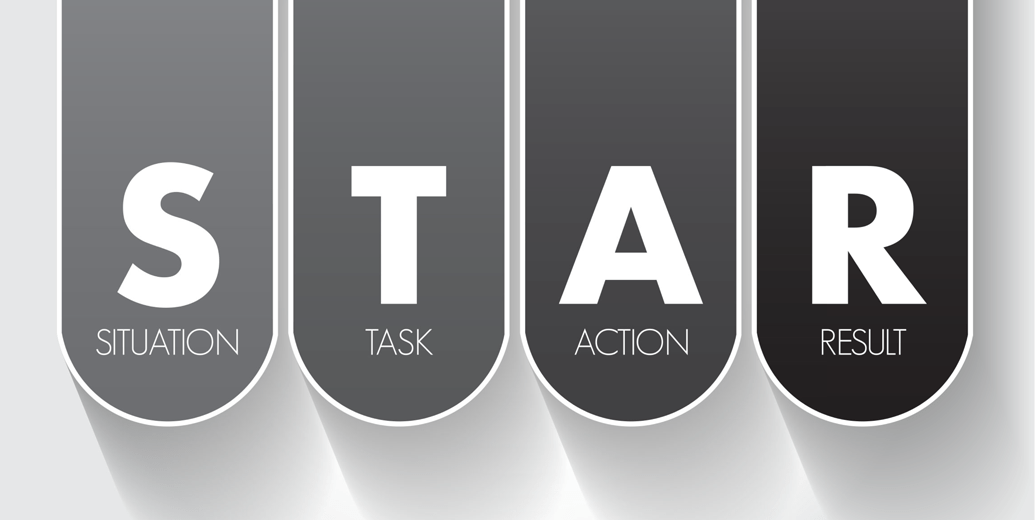
Using the STAR methodology can be an effective way of answering competency-based interview questions, and from our experience using it to frame your answers in public service interviews is a must! The idea behind the STAR methodology is that you talk about a specific example, give a good amount of context, and then really focus on finishing off by showing that what you did achieved a really positive outcome. So let’s break it down:

STAR is an acronym for Situation, Task, Action and Result


Situation

Set the context by describing a relevant situation where you applied your skills/qualities and gained your experience. It is important that you describe a specific event or situation not a generalised description. The situation that you discuss should be from a previous professional position. This is about framing your example and giving the interviews the context of the situation – try to be as specific as possible.


Task

What was YOUR specific role / job / responsibility? Describe your responsibility in the situation and what goal were you working towards to achieve.


Action

What did you do and how did you do it? Describe the steps and actions you took to address the situation. Use “I” not “we” when describing actions and be conscious that you don’t describe what the team did, keep the focus on you.


Result

Outline the result that stemmed from the actions you took. It is important that you think about how the result relates to the job you are applying for. Don’t be shy, take credit for your work and ensure your answer contains a really positive result. Even if you are talking about a difficult situation, sometimes how you overcame adversity can be a great result!


An Example Question and Answer using the STAR Methodology in an interview

Question: Can you give an example of a time when you had to clarify the needs of a stakeholder, colleague or manager? (supports productive working relationships)

Situation

Currently I work in the Business Improvement Team and we work as part of a larger division which is geographically dispersed across a range of locations so we don’t see each other face-to-face.

Task

There was a time when I had to do quite a bit of work with one of the managers of one of the teams that works alongside our team. We had to work together on important emergency management issues, however this manager began frequently calling me to ask me to do tasks that were well outside the responsibility of my role.

Action

While I was initially happy to help it began to have an impact on my own work outputs and priorities. I came up with a strategy to manage the situation where, when the manager would ask me to do a task, I would tell them the other priorities that I had for the day, which gave them an understanding of my workload and the situation improved significantly without developing into a conflict. I also kept my supervisor in the loop.

Result

The outcome ended up being really positive all round, as it turned out the manager didn’t have a good understanding of my workload due to the remote working arrangements.


CBR Recruitment can provide guidance on how to use the STAR methodology to blitz your next job interview, so please give us a call on 02 6103 7000 or email: hello@cbrrecruitment.com.au

For an in-depth guide on “Competency-based Interviews” please refer to our blog Competency Based Interviewing – What is it and why use it?


Categories
Client

Competency Based Interviewing – What is it and why use it?

The current industry leading practice is to interview candidates using a technique known as “Competency Based Interviewing” (also called “structured” or “behavioural” interviewing). Competency based interviewing is based upon the concept of linking three parameters – knowledge, skills and attitude. Each question is designed to test one or more specific skills and the answer is then matched against pre-decided criteria and marked or rated accordingly. For example, the interviewer may want to test the candidate’s ability to deal with stress by firstly asking how the candidate generally handles stress and then asking the candidate to provide an example of a situation where he or she worked under pressure.


How is Competency Base Interviewing Different?

Competency based interviewing differs from traditional interviewing (also called unstructured interviewing) as traditional interviews are essentially a conversation where the interviewer asks a number of questions that are relevant to what they are looking for, but without any specific aim in mind other than getting an overall impression of the candidate as an individual. Questions are usually quite random and can also be quite open. For example, a question such as “What can you offer our company?” is meant to gather general information about the candidate but does not test any specific skill or competency. In an unstructured interview, the candidate is judged on the general impression that he or she leaves and the process is therefore likely to be more subjective.


What are the Benefits?

Competency based interviews are more systematic, with each question targeting a specific skill or competency. Candidates are asked questions relating to their behaviour in specific circumstances, which they then need to back up with concrete examples. The interviewer will then dig further into the examples by asking for specific explanations about the candidate’s behaviour or skills.


An example of a competency-based interview question is:

“This is a busy role which manages high volumes of client contact and juggles a number of competing priorities. Can you tell us about a time when you have had to coordinate multiple work outputs with competing deadlines? What strategies did you employ and what was the outcome?”


This question tests organisational skills, working at a fast pace, dealing with stressful situations, providing high quality client service and achieving results.


Utilising Methodology

The “STAR” methodology can be useful tool to frame competency-based interview questions.


Situation

Ask the candidate to set the context by describing the circumstance where they used the skills or qualities you are seeking.

Task

What was their role / involvement in the situation?

Actions

What did they do and how did they do it?

Results

What did they achieve? What was the outcome of their actions?


Regardless of the specific position being recruited it is always worthwhile asking a question about communication skills, teamwork and organisational skills as these qualities are important requirements of most jobs.


Secondary Interviews

Another effective technique in assisting to select the best candidate for the position is to conduct a secondary interview with the top one or two candidates. This interview should be a much less formal unstructured interview – at a café for example. This is a good opportunity to meet the candidate in a less stressful environment than the initial interview, and will give you an excellent insight into their potential fit into the culture of your organisation, and you should be able to effectively gauge how you would work with the candidate on a day-to-day basis.


For assistance with your next recruitment campaign or with developing competency-based interview questions, please call CBR Recruitment on 02 6103 7000 or email: hello@CBRrecruitment.com.au

Categories
Client

5 Key Recruitment Tips for Small Business Owners – How to achieve the “perfect fit”.

Almost every small business owner I speak to says that recruiting and retaining high quality staff for their business is one of their biggest challenges. Recruiting staff is certainly a big step – wages are an expensive overhead, and the difference between an excellent staff member and a substandard staff member can have a profound impact on the overall performance of your business.

We look at recruiting staff as being an investment in your business – an opportunity to grow, to increase performance, and to provide your stakeholders with a better service or experience. Before we even start to consider “fit” there are several important steps in any recruitment campaign that need to be undertaken.

Firstly run a formal recruitment process – including at least first and second round interviews. Secondly ensure that the person actually has the technical skills to do the job, so do appropriate background checking and skills assessments.


What does “fit” actually mean?

“Fit” can be a hard thing to quantify, however we define “fit” as: how the candidate’s goals and objectives align with those of the business – and also whether they have the skills and experience that the business needs at a specific point in time.

While each business is unique, there are some specific characteristics that we look for in candidates when we recruit for small businesses:

A Track Record in Client Service Roles

There are very few roles in small business which don’t have a client service component – everyone represents your business to some extent, so we look favourably on candidates who have worked in hospitality or retail roles early on in their careers. Even if it was a long time ago, while studying for example, these types of candidates naturally gravitate towards people and enjoy human interaction. Skills developed in hospitality or retail roles include: communication skills, negotiation experience, problem solving ability, teamwork, along with having a client centric approach.

Broad Skillsets

Candidates with narrow skillsets or a very specific area of expertise can often be less versatile, which can be problematic if your business is rapidly growing or changing – job roles, corporate structures and skill requirements can change dramatically. People who can take on some tasks which fall outside their specific job role can be a huge asset – particularly if someone has the ability to take away some of the peripheral tasks you do as a business owner. Look for candidates who demonstrate versatility, adaptability, the ability to multi-task, and are highly organised.

Emotional Intelligence

Emotional intelligence is something that can’t be measured on a CV, however it’s crucial when it comes to the fit of the candidate within your business. How intuitive are they, what will they be like to work with, and how do their personal goals and values align with those of your business? When interviewing candidates for your business, think about their overall job suitability, how they have previously shown initiative, and also how they interact with you during the interview.

Results / Outcome Focussed

Results or outcome focussed people generally understand the commercial reality of being in business – they will want to help the business to grow, they will look to take on more, and they like working to deadlines. Look for a track record of achievement in previous roles, their personal drive and overall “energy”.

Loyalty

In small business staff loyalty is very important due to the time and effort involved in recruiting and training a new staff member. Look at a candidate’s employment background thoroughly, put yourself into their shoes, and try to understand their reasoning for leaving previous positions. The other thing to consider is their current relationship with past employers, so be very thorough when conducting references.


If you need any assistance with identifying candidates who are a perfect fit for your small business, please call 02 6103 7000 or email: hello@CBRrecruitment.com.au